Saigon — The Widow of April
Saigon — The Widow of April
Long ago,
in the northern end
of an S-shaped land,
there stood an old Father Nguyễn
who gathered his people
to drive French rulers from their home.
He lived through wars,
through hunger,
through winters
where water spinach alone
could not fill empty stomachs.
Then one day,
in July 1954,
the greatest separation began.
Nearly a million children
carried statues of Christ,
held babies in their arms,
and journeyed southward
searching for farmland,
for freedom to worship,
and for another roof beneath which to live.
Mother North
stood watching them leave,
without crying aloud.
She knew
she no longer had enough fertile land
to keep all her children home.
The South, at that time,
was warmer in its family meals,
louder in its marketplaces,
and filled with temples
where incense rose
for ancestors long gone.
Two uncles
were sent South to guard the house.
One uncle loved old royal robes.
The other was stern
and trusted the Cross
more than the sound of temple bells.
But the Southern home
had always carried many altars.
Some bowed to Buddha.
Some recited prayers to Jesus.
Some simply lowered their heads
before portraits of their parents.
And from then on,
sighs began living together
under the same roof.
The young men
educated in French schools
loved uniforms
more than rice fields.
They spoke
“Moi, Toi, Oui, Monsieur, Madame”
more often
than the language of river villages.
Some became intoxicated with power.
Some worshiped military ranks.
Some believed war
was the quickest road
to becoming men.
Meanwhile,
in the North,
the old Father looked southward
and saw that house
slowly drifting away from his voice.
He was not angry.
But he knew
a single home
could not survive forever
with two fires burning
in opposite directions.
Then war returned again.
Children of one mother
fired upon children of another.
Vietnamese mothers
learned to identify their sons
by their military uniforms.
The rice fields
could no longer tell
Northern blood
from Southern blood.
And on April 30, 1975,
Saigon —
once the most beautiful woman in the South —
suddenly wore widow’s black.
She changed her name.
Changed her streets.
Changed even the familiar sounds of her voice.
But she could not change
the shadows of those
who still whispered “Saigon”
in exile and in dreams.
Then came the long silence afterward.
Some disappeared
into re-education camps.
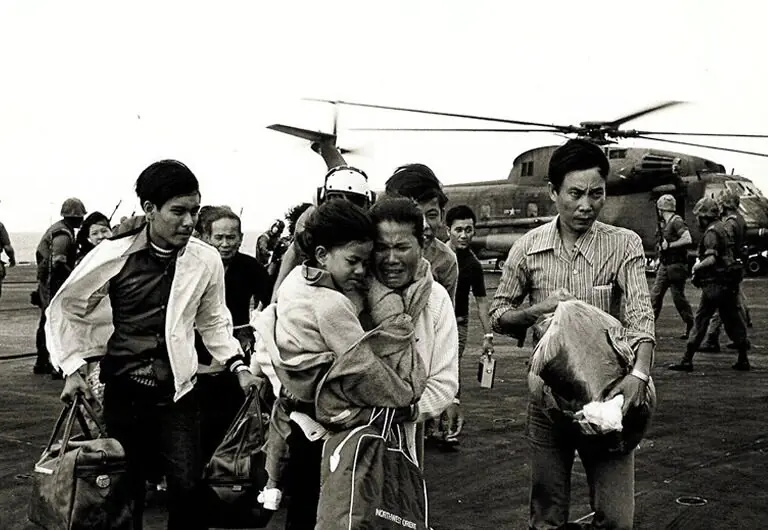
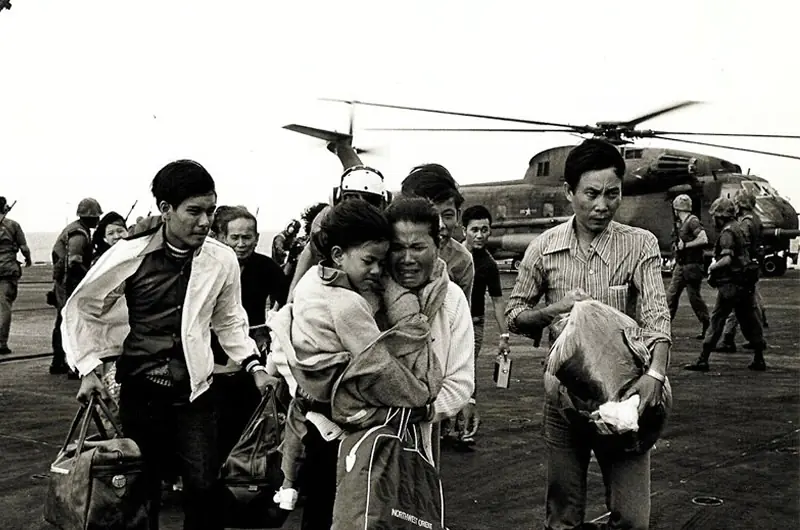
Some fled by sea
under moonless skies,
carrying children,
photographs,
and the last pieces of a broken home.
Some remained buried
without even a name upon a stone.
And far from home,
in crowded apartments
and unfamiliar lands,
people still lowered their voices
when speaking of the city
they once called theirs.
Years passed.
The two mothers grew old.
One coughed more than she spoke.
The other bent with age
waiting for letters
from children lost at sea.
Then the children of both homes
began marrying one another.
Northern accents and Southern accents
rested together
inside the laughter of grandchildren.
Those grandchildren
spoke more English than Vietnamese,
yet still asked:
“Why do Grandpa’s eyes become wet every April?”
No one could answer easily.
Because some wars
end with gunfire,
but never truly end
inside the human heart.
Now,
more than half a century later,
people still call April
by different names.
But perhaps,
deep within themselves,
both sides know:
No one truly won
that war.
Only mothers
lived long enough
to bury nearly all their children.
And Saigon —
the Widow of April —
still sits there
every April,
quietly waiting
for the day
her children
will finally call one another
brothers again.
Jim Huynh
Mother’s Day, 2026